
Teams already have gates. They hide them under green checkmarks and optimism. A PR says “all good”, somebody clicks approve, and production gets whatever survived the rush. That is not a gate. That is a polite shrug.
A useful gate asks for receipts. Did the tests run on this commit? Which scanner produced the result? Which dependency set went into the build? Which human reviewed the risky part? If you cannot answer those questions from the PR itself, the review still runs on memory and vibes.
PR review evidence should sit next to the change. I want test results, lint output, security findings, a short risk note when the change bends auth or data flow, and links to generated artifacts. For supply-chain work, I also want provenance and an SBOM. SLSA gives a clean frame for artifact provenance. OWASP ASVS gives a vocabulary for app checks instead of hopeful review notes.
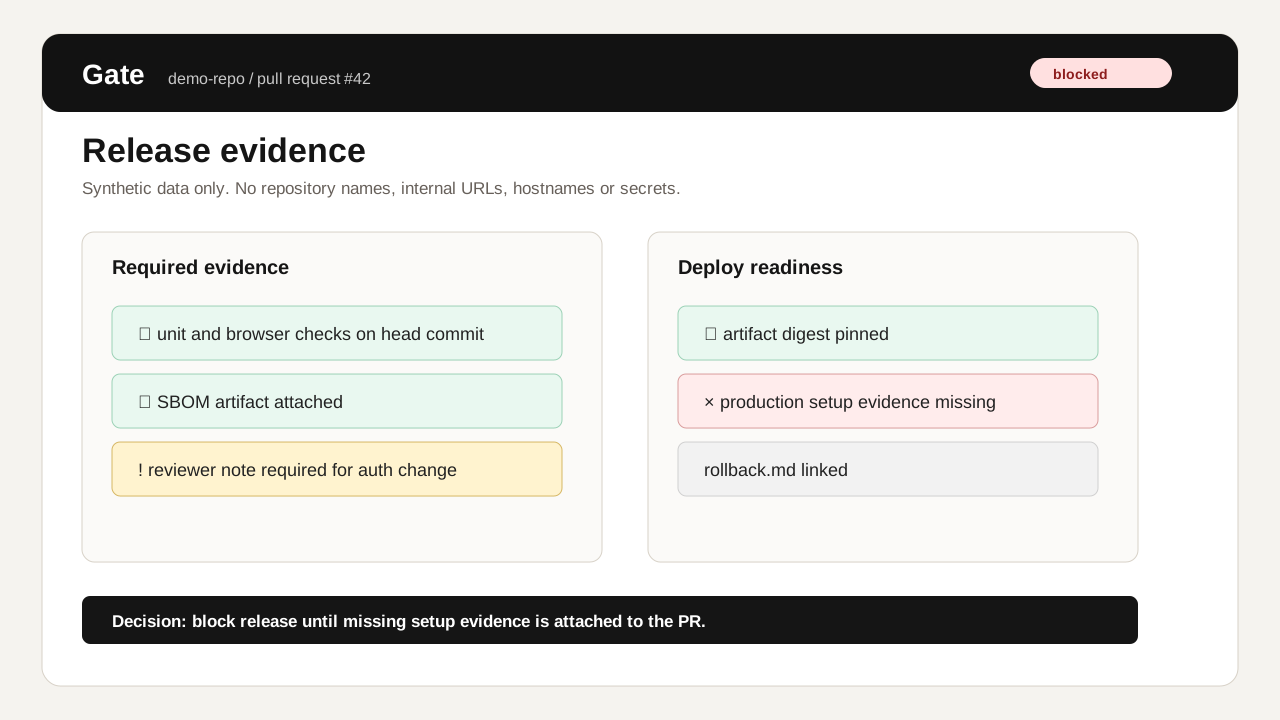
Deploy readiness asks a different question. A clean PR does not prove that the release can go out without drama. The gate should know which artifact you promote, which environment rules apply, who can approve, which branch may deploy, which config changed, and how you roll back if the release starts chewing furniture. GitHub environments already support that shape: protected environments, required reviewers, branch restrictions and custom protection rules.
Fail-closed behaviour matters more than the UI around it. If the scan did not run, the gate should block. If the SBOM is missing, block. If the reviewer approved the code but the deploy artifact came from another commit, block. If the evidence store is down, block and say why. People complain about that until the first bad Friday deploy. After that, the complaint budget gets smaller.
NIST SSDF points in the same direction: track security requirements, protect the build path and collect provenance data. You do not need a governance costume for that. You need proof attached to the work.
The best version of a gate feels strict in the right place and quiet everywhere else. Reviewers waste less time. Release decisions get shorter. Audit questions stop turning into archaeology. You do the work, attach the evidence, and the gate opens or it does not.