
Updated 9 September 2026: Sudoku: Tessera is now available for iPhone, iPad and Android. You can also play the PWA in your browser.
I wanted to play one Sudoku puzzle without an advert interrupting me. The apps I tried made that harder than it needed to be. I kept closing pop-ups when I wanted to fill in a square, so I started building my own version.
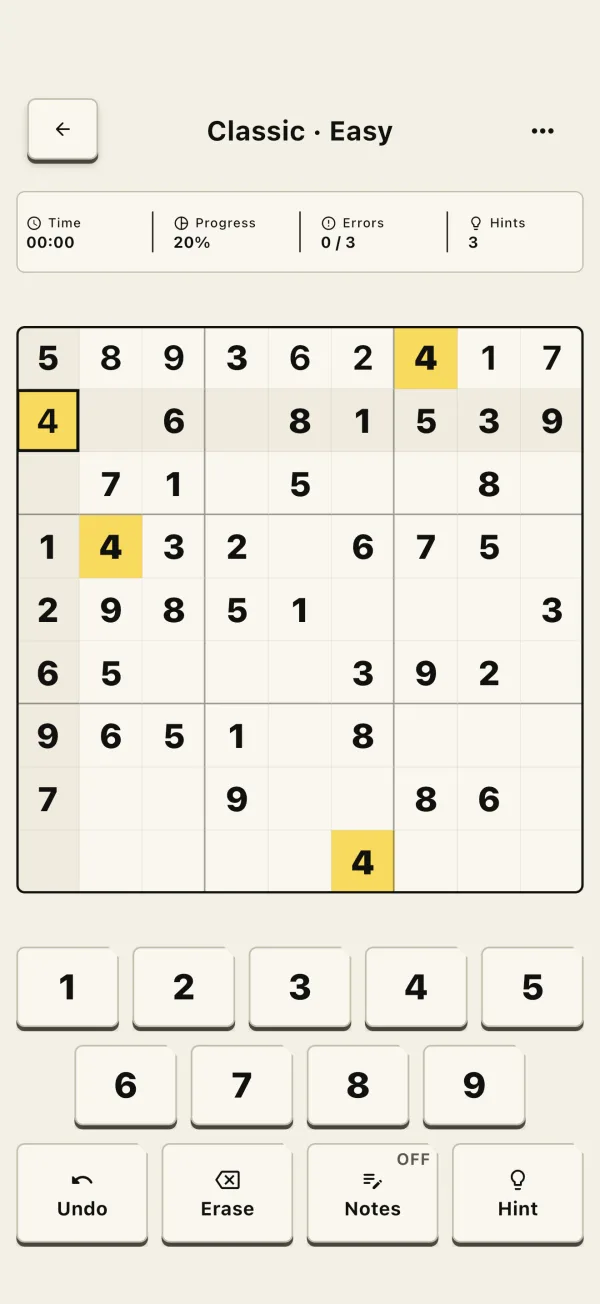
I started with a PWA that I could add to my home screen. Since then I have built Sudoku: Tessera in Flutter for iOS, iPadOS and Android. I have kept the web version too, so you can try a puzzle in your browser before installing an app.
With Daily you can play the puzzle for that day. In Classic you choose from six difficulty levels, from Beginner to Master. You can use notes, undo a move or ask for a hint when you get stuck.
You can play without an account. If you want to sync your finished games between devices, you can sign in with Apple or Google. Classic works offline in the native apps; the web version needs an internet connection.
I build Sudoku: Tessera with a privacy-first approach: I use no advertising, analytics SDKs or cross-app tracking. Optional cloud sync uses Supabase to process account and game data. You can read what data each feature uses in the privacy policy.
Building for phones and tablets gave me more to work on than the puzzle grid. I have been refining touch feedback, loading screens and the layout on smaller screens. I want selecting a square to feel clear and generating a harder puzzle to show progress, so you know the app is working.
Sudoku started as something I wanted to use myself. Now friends and family are playing too, and their feedback helps me find the details I miss on my own phone.
Try Sudoku: Tessera: Website / webapp, App Store or Google Play.